

A Love Letter to New England, Through “Waspringa”
By: Aneesha Mahapatra
Growing up in New England, it was always fascinating to explore different towns and cities around the area. Whether it was a weekend trip, a random summer day, or an escape even for a couple of hours, there are so many hidden gems that one could never understand the feeling of, if they’re not from one of the six states.
One of my favorite places to visit was Salem, Massachusetts. I’m Halloween-obsessed and have a weird connection to the spiritual and spooky realm, so being there during the fall is pretty much a dream. And within a 10-minute drive is another coastal town many forget about- Marblehead. It may seem like a Cape Cod type town at first, but it’s more intimate with its historic streets and strong sailing culture to represent that true New England feel.
What I love about Marblehead is that it doesn’t feel too touristy. It has this cozy, old-school New England charm that makes you want to slow down, close your eyes, and watch the waves move in the ocean. So when I heard a new film was actually shot there, it immediately caught my attention. Waspringa brings that setting to life.
Molly Greville, a writer, director, and actress, who wrote Waspringa nods back to her Marblehead upbringing in this short comedy drama story about a dysfunctional family forced together on a sailboat for one chaotic weekend where old tensions, personal struggles, and family expectations begin to unravel and identify a sense of belonging.
I got to speak with Molly about this project and find out just how much Marblehead and the New England region means to her.
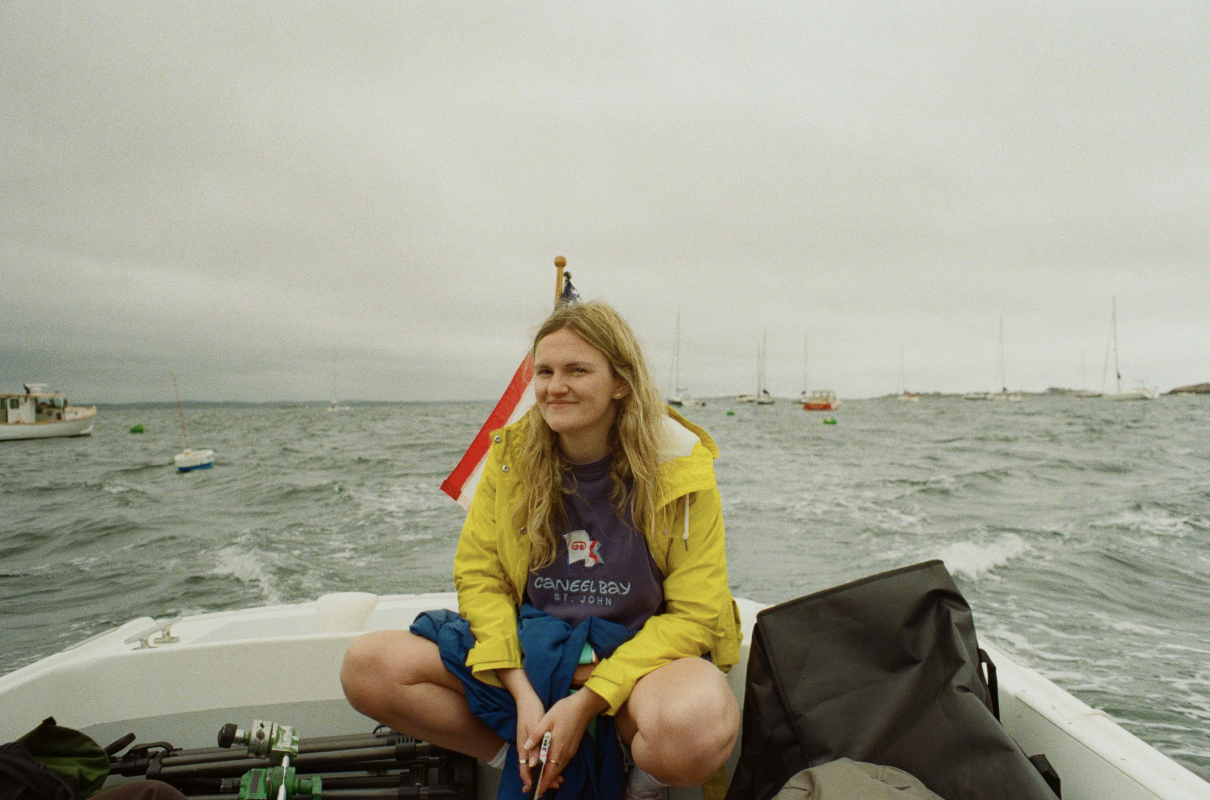
Photo Credit: Jordan R N Miller
Growing up in Marblehead, what’s one memory that comes to mind that you think stayed with you and found its way into this film?
“The coast of Massachusetts (and New England in general) is a truly one-of-a-kind, beautiful place. It’s picturesque, and I didn’t really understand that growing up. In Waspringa, the main character is on a visit with her family to Maine (we filmed in Marblehead for convenience purposes, but really, the movie takes place in Maine), and all the while, she’s attached to her phone, obsessing over texts, Instagram posts, and so forth from her crush back in the city. I think that’s something I grew up doing– being so obsessed with whatever was on the internet, whatever life I felt that my internet self projected or could manifest, and not being in the moment and witnessing my surroundings. In the film, we visually tried to capture that – this intense, beautiful background with limitless sky and sea, but really, all of these characters are trapped and limited by their phones or their own personal complexes, and unable to see beyond their own nose.”
What did growing up in Marblehead mean to you, and has that relationship with your hometown changed as you’ve gotten older?
“My parents are divorced, and my mom lives in a nearby city, while my dad and stepmom live in Marblehead. I spent a lot of time there, but was never really part of it. It was just where I spent every other weekend for a really long time. So, while I know the area well, I have a sort of outsider’s perspective on it.
I grew up feeling outside of it, like I was sort of watching from the other side of the window. When I was younger, I watched with envy. I think it sort of had this whole thing tied into it -- adolescent, romanticized ‘what-ifs’ and ‘if-onlys,’ and the fact that my dad and his new chosen family lived there. It’s super dramatic and not that deep, but when I was 16, it felt that deep, you know?
I think I thought of Marblehead as this perfect place that I would never belong to. And now I see it more clearly as just a beautiful place, and a place I was lucky to spend time in.
But I also think that being an outsider gave me a chance to tell a more interesting story about the kind of people who live there — i.e., WASPs. I feel like I’m half-WASP, so I know what they’re like, but on my other side, I’m from a deeply blue-collar Boston family and I don’t feel like a WASP at all. I think that gives me a unique perspective to tell this particular story.”
Was there a part of yourself or your own experience that you were a little nervous to put into Waspringa?
“Waspringa is a personal story, and there are a lot of similarities between the main character, Liv, and me: She’s queer, she came out to her family in her mid-20s, she has an older sister with an opioid addiction, we look the same (since I’m playing her, lol), and so just getting that personal and that close to home was intense.
With anything personal like this, the biggest challenge for me is trying to explain to the people closest to me that this is sort-of-true and also completely-made-up. So, while the character looks like me and feels like me, it doesn’t mean that everything is 1:1. Not every character has a direct tie back to real life. I had to talk a lot of people down from thinking I wrote other characters in the movie as direct representations of them. And a lot of the characters are really absurd and intense, and I wouldn’t want the people I love to think that that’s how I saw them. This is fiction. It may look like my real life, because it came from me, but it’s not.”
What was the funniest or most chaotic thing that happened while filming around Marblehead or out on the water?
“We had a completely professional crew come in from New York, and while they were total film-experts in and in their element in that respect, most of them had never been on a sailboat before. And the weather wasn’t great on the first day of filming, so that resulted in a fair amount of seasickness. We had crew members throwing up over the side of the boat, and a whole arm of the production team just on triage duty– getting seasick people water and crackers and ginger chews and Dramamine to make them feel better. This crew was amazing, though. Everyone was a trooper and so professional. I’m such a baby when I’m sick, and these guys totally threw themselves back into the work after. I was so impressed.”
Were there any people, places, or details from your childhood that you knew had to make it into the film?
“There’s a lot of sibling fights and cutting remarks in this, which is my favorite kind of dialogue to write because you can really let it rip, and make characters say the most insane things to one another with very little stakes or consequences. My sister once said this really hilarious thing to me, and I’ll never forget it: I was complaining about our parents, and how mean they were to me for some reason-or-another. I can’t remember what it was, but I know it was super dumb and I must have sounded like a spoiled brat. And she looked at me and flatly said, ‘Yeah. Poor you. You’re like abused,’ and it really sent me back to reality. I was like, ‘No you’re right. I’m being a brat.’ That line ended up making it into the film.”
Was there a particular spot in Marblehead that you knew you had to include in the film because it felt so connected to the story or to your own memories?
“Not in Marblehead, but in a city nearby, Peabody, – actually where my mom lives, so in the other town I grew up in, there’s this really cool bowling alley. There’s a scene where two siblings pick up their other sibling at work, and in the initial script she worked at a motel. We weren’t able to find a motel that would let us shoot in their parking lot, and so when it came time to pick another place I instantly thought of this bowling alley. It was the coolest place to go when I was a kid, and the parking lot outside of it is so visually interesting, and reminds me of Massachusetts. They were gracious enough to let us film there. It was awesome.”
What was it like having local businesses and people in the Marblehead community become part of the filmmaking process? Was there anyone who went above and beyond to help make the film happen?
“It was incredible. When I started this process, I was really nervous. In general, I hate asking people for things. I’m the type of person who won’t tell the server at a restaurant when my meal is wrong, and so, when I decided to make the movie, it took a lot of mental work for me to allow myself to lean on other people. I had to. There is no way to make a film on an island. You need so much help – financially, creatively and emotionally. I mean, even asking my co-director, Tara Donnelly to jump on board for this project was so nerve-wracking for me. The fact that her answer was an emphatic, ‘yes’ was surreal.
As we were approaching the edge of our budget, our producers, Jordan and Jacqueline, had the idea to reach out to local businesses and ask for meal donations (feeding an almost 20-person crew is no joke), and I was like, “Yeah, sure, but I doubt it will go anywhere.” I was blown away by how many businesses wanted to help. They were so generous and supportive, whether I had a personal connection to them or not. It was incredible.
Also, the person who lent us his boat to film on, Mark Luckes, was so supremely helpful and generous. We couldn’t have done this without him. And back to crowdfunding for a second: Every person who donated blew me away with their generosity. I can’t thank them enough. (A lot of them didn’t want to be named, but they know who they are).”
How did you want Marblehead to feel on screen? Did you want people to recognize the town, or more so feel what it was like to grow up there?
“Recognizing the town wasn’t the goal at all since the film actually takes place in Maine. I’m sure there could be some real mid-coasters who will watch this and be like ‘That’s not Maine!’ but for the most part, I think we got the vibe down. I more so wanted people to see how beautiful and limitless the coast is, and juxtapose that to how in-their-own-way and up-their-own-asses the characters are.”
What was the biggest challenge for you personally while making the film?
“The biggest challenge was the learning curve, in a couple different senses. I had to learn how to be a filmmaker, since I’ve never done that before, so there was a technical learning curve there. I had to learn about film insurance, and permits, and union rules, and LUTs and sticks and appleboxes. But I also had to learn how to ask for things, lean on people and hear ‘no’ without falling apart afterward.
Rejection is scary, and we got rejected so many times throughout this process — from crowdfunding and grant applications to creative collaborations. And there’s going to be a lot more ahead as we apply to festivals. But I feel prepared for it!”
What do you want the audience to take away from Waspringa?
“I would hope that one of the takeaways is that you can begin again at any time and anywhere. No matter where you came from, or who you were before, or who the people who love you want you to be. But art is about letting the audience come to their own conclusions too, so I can’t wait to hear what people take away from it in their own words!”
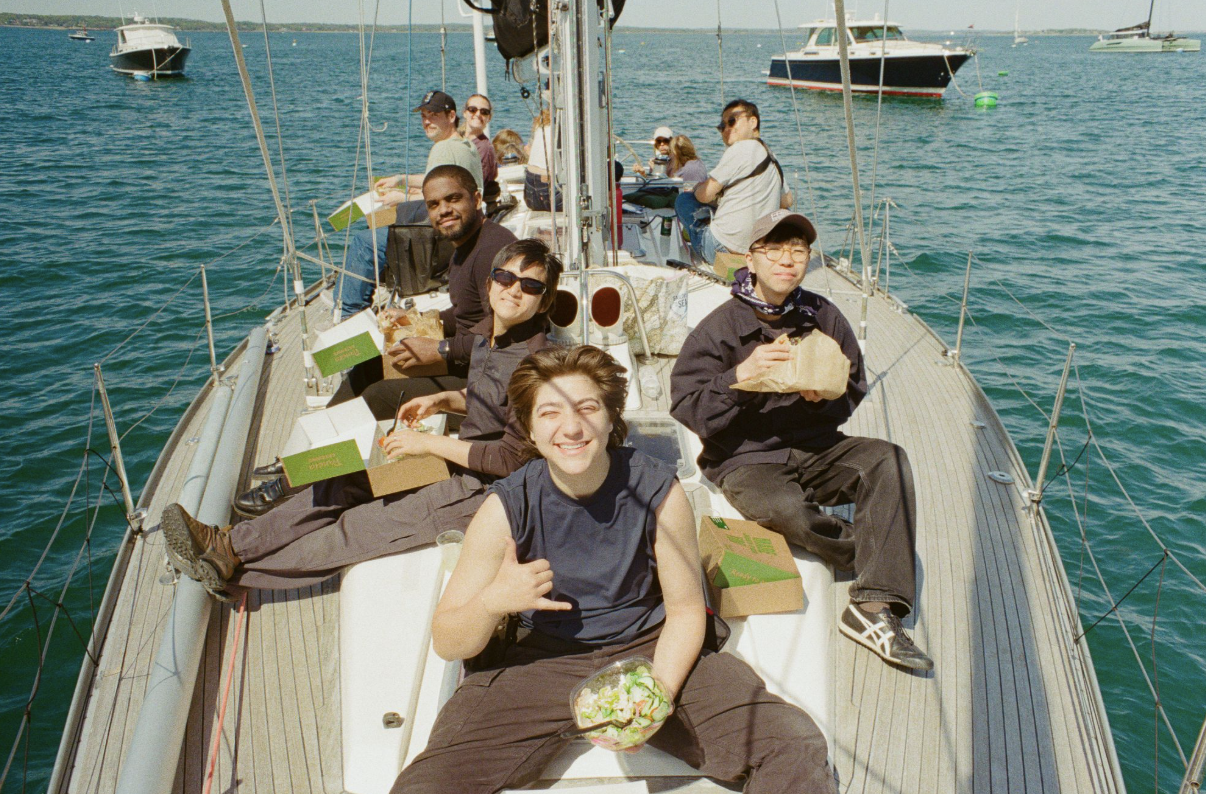
Photo Credit: Jordan R N Miller
There’s something really special about seeing a place you grew up visiting through someone else’s eyes. That’s what stayed with me most about Waspringa, that beneath the humor and family chaos, it’s also a story about feeling like an outsider, trying to understand where you fit, and learning to appreciate the places that shaped you.
In a way, there’s nothing that feels very New England to me than that. Maybe you don’t realize how special a place is until you leave it. Going away to college made me appreciate New England in a way I hadn’t before, and now I find myself wanting to come back and visit these towns and soak in that feeling more often.
Waspringa won Best Short Script at the Palm Springs International Screenplay Contest, as well as the Hollywood Just4ShortsFilm and Screenplay Competition, and is set to be released later this fall.
In the lead-up to its debut, I hope more people get the chance to see Marblehead the way Molly does- not just as a beautiful New England town, but as a place filled with so many memories, complicated feelings, and stories worth telling.
You can stay updated on the full release date and more through its IG page.