

Has Concert Culture Gotten Toxic?
By: Aneesha Mahapatra
It seems like everyone’s having a hard time affording concerts these days. It’s almost as if artists have made it a "privilege" to attend to.
However, concerts have always been about more than just the music. They’re a place to feel community, devotion, access, and be comfortable with who you are and what you love. Seeing as though many major artists have announced tours or special shows this year, that space of love and usually easy access has become quite difficult.
Live music feels like a mix of excitement and expensive reality from fans singing their hearts out in packed venues to thinking about how much the night cost them. To understand what concert culture feels like right now, I spoke to two dedicated music fans who have grown up in front rows, long ticket queues, and the emotional highs of modern fandom.
The Price of Seeing Your Favorite Artist
For Stella Rask from Portland, Oregon, concerts have become something closer to a privilege than a regular hobby.
She’s attended shows by Green Day, Amine, Amarae, Riize, Charli XCX and Troye Sivan, along with Capital Hill Block Party in both 2023 and 2024. Despite how frequently she goes, she’s clear that things have gotten much more expensive.

Do you think going to concerts today feels like a luxury or privilege? Why or why not? Has that changed in the past few years?
“Yes, I do think concerts feel like a luxury,” she says. “They’ve become increasingly more expensive, so being able to spend that amount of money is a privilege. In the past couple of years, prices have gone up with the amount of resellers. It’s harder to get tickets at market price because of reseller culture.”
Rask let me know the most she’s ever spent for a concert ticket was around $400 for Charli XCX.
“It was a large amount just for the concert,” she admits, “but I had been wanting to see her for years, and I’m so glad I went. It was a great night. We had great spots and had such a fun time.”
Still, not every story ends with a secured ticket. Rask wanted to see Childish Gambino on his last tour but couldn’t justify the cost at the time.
“I was so sad I couldn’t go when he was in my hometown,” she says. (The tour was later canceled after he suffered a stroke.) The regret lingers not because she wasn’t a “real” fan, but because ticket affordability made the decision for her.
Concert fan, Amanda Kramedas from Delaware, also shared that same frustration:
“Immediately, ticket prices,” she says when asked what she would change about concert culture. “I’m so serious, I’ll do anything to see my favorite artist, but these prices are just sad. People are living paycheck to paycheck. It shouldn’t be a privilege to support your favorite artist.”
She’s especially critical of platinum pricing and resale markups. “Just for once I ask for ticket prices to be reasonable and not be resold for 10x the price. I wish resale tickets could only be sold for face value. It’s gotten so out of hand that you have to pick and choose which artist you can see or go into extreme debt. It should never even be a thought.”
Artist Responsibility or Overall Industry Problem?
Do you think artists are responsible for ticket affordability, or is it more of an industry/system issue?
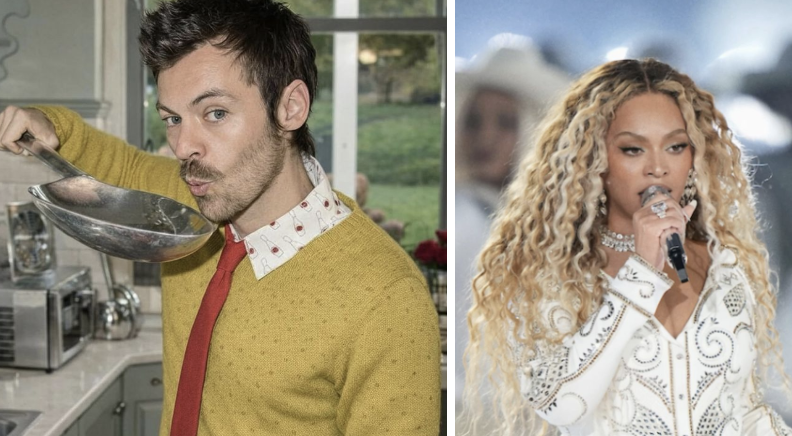
“I believe some artists have more control than others. Harry Styles, for example, is very aware of how much his tickets cost, and his upcoming tour prices are outrageous. While the industry is to blame, massive artists like Harry Styles and Taylor Swift are wealthy enough to make base ticket prices a little cheaper,” Rask shared.
Kramedas shared that she grew up going to concerts and loves live music. Now that she’s an adult, she wants to be able to fulfill her childhood dreams of traveling and seeing artists she couldn’t see when she was younger. However, the entire industry and even the artist does become a problem eventually.
“I understand we all need to make money and artists need to get paid but it’s to the point where it becomes GREED. Something great for this industry to change would be if Ticketmaster wouldn’t exist or would be different and could only sell tickets for face value. A 100K queue wouldn’t exist either, an artist you want to see you have to take a quiz to verify you’re a fan and actually know the artist.”
Are Concerts About Community or Competition?
“The fan girl experience today can go both ways,” Kramedas stated.
She’s built lifelong friendships through concerts and social media, people who started as fandom mutuals and became her regular best friends. However, she’s also seen how competition creeps in its way through concert culture.
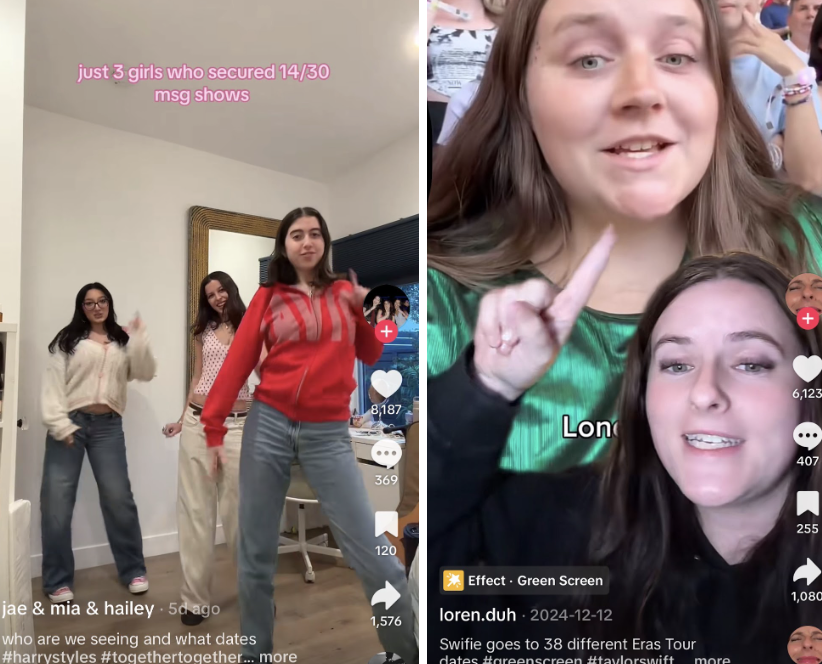
“When an artist goes on tour and you have to fight a Ticketmaster war, it can strain friendships. Greediness and selfishness take over for a ticket. People brag about how many shows they’re attending, or say someone’s not a ‘real fan’ for not going to enough shows or for going to too many.”
Rask sees a similar situation when it comes to VIP experiences, as well. “I think it makes rich fans seem more dedicated than fans who can’t afford VIP packages. But just because someone can’t afford closer seats doesn’t mean they aren’t as dedicated. Fan culture doesn’t need to be as competitive as it is, although I’m sure fans that can’t afford to be close up feel inferior.”
That competitive edge feeds into a larger question when it comes to these things: Is attending concerts becoming more about status?
“I’m going to be honest,” Kramedas shared. “Yes. It’s become more about status. A lot of it has to do with social media. The minute something becomes popular, everyone hops on it. Some people attend just to brag to say they were on barricade or super close at the show everyone’s talking about.”
She also got into the specifics of the effort going into concerts when it comes to outfits, exclusivity, etc.
“Going to a concert should make you feel good, a stress reliever from a hard day and work and letting it all out at a concert. Why force yourself to be miserable at a concert for an artist you don’t care for just to say ‘you were there’? The last thing an artist wants to see is someone standing in the crowd bored out of their mind or looking like they don’t want to be there. Concert outfits have become a big thing now with there being a theme to fit their aesthetic which is so cool. However, everyone should be allowed to wear what they want and not be shamed for it. DIY an outfit you worked on for months? Amazing. Throw on a tour shirt you bought at the merch stand? Incredible. At the end of the day, it should always be about the experience, not where you sit or what you wear.”
Be in the Moment or Watch Through Your Phone?
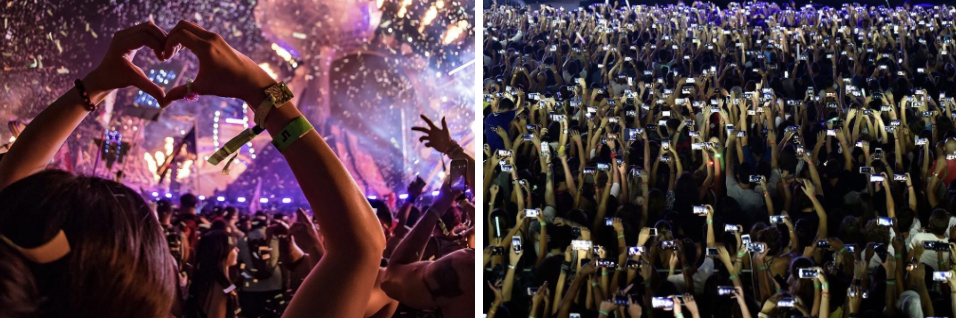
After the pandemic, Kramedas felt intense pressure to document everything from outfits, clips, recaps, TikToks, and more.
“I was exhausted. I felt like I lost out on being present because I was so focused on posting content. It’s like you lose a touch of reality when you’re always snapping videos.”
Now, she’s more mindful about how she experiences a concert. She captures moments with friends instead of obsessing over the quality of footage of the artist. “I honestly think it makes artists uncomfortable to look out and see a crowd of phones. That’s scary when you’re trying to get energy from the crowd.”
Still, she understands why people want their videos to blow up online. “People will literally attend a concert just to post videos and try to go viral. That’s sad to even think about.”
The Emotional Aspect and the FOMO…
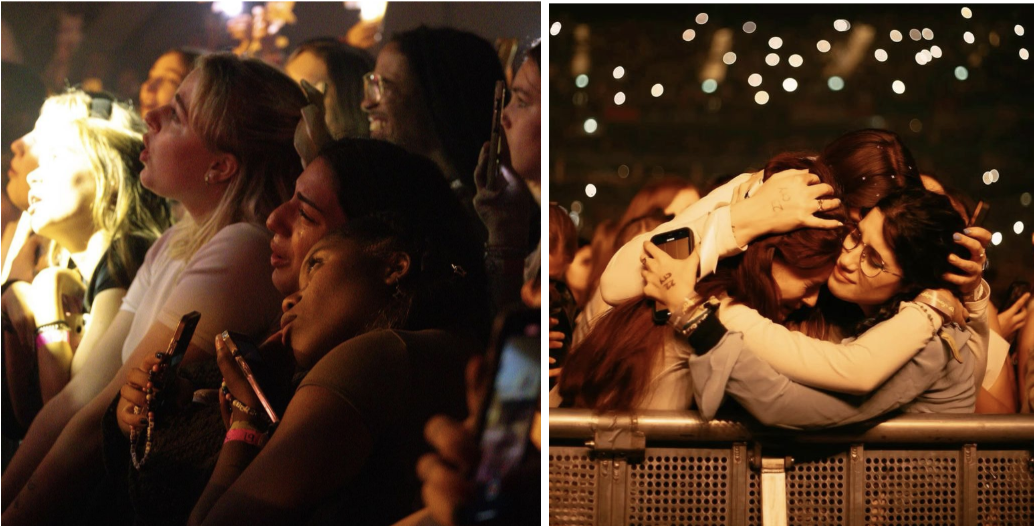
The feeling of FOMO is stronger than ever. Missing a big show, especially when your friends are going can feel awful. It creates pressure to go to as many concerts as possible just so you don’t feel left out.
Kramedas also said concerts feel more intense now, emotionally and financially, and a lot of that has to do with social media, especially depending on whether or not you can go to a show. “It’s basically saying, you can afford this? Congrats, you can go. You can’t? That sucks.”
“To some people, it feels like the end of the world missing a show you were not in attendance for. This ends up driving this hunger where people feel the need to go to as many shows as possible so they don’t miss out”, she concluded.
Despite the high prices, the competition, and the cameras, both Rask and Kramedas agree on one thing: The emotional core of concerts still feels real.
“When you’re in a room full of people singing the same lyrics, it feels genuine,” Rask said. “It’s rare to be around that many people who all love the exact same thing. The connection I feel with the people around me means a lot.”
She also noted authentic artists' experiences bring concerts more to life: “I really enjoy when artists bring a fan on stage at concerts because they’re basically making someone’s dreams come true, and it’s a super fun way to keep everyone in the audience engaged. I loved what Amine did for example, where he had a fan sign his pants at every stop.”
Kramedas feels more connected to strangers at concerts than in everyday life. “It’s a safe space. You don’t feel judged. In normal life, connecting with people can feel like a game of roulette… Do you have the same interests? Will they hate what you love? But at a concert, you already know you share something.”
That shared love creates what she describes as a “euphoric” crowd: people dancing with strangers, hyping the artist, leaving the venue happily stunned. The opposite of that would be a bad crowd which includes people shoving their phones in your face, pushing fans constantly, selfie lights blinding eyes around the room, and giving off an energy so dull, even the artist feels it.
Who Gets to Go?
Both fans ultimately circle back to access.
“Live music is becoming less accessible for average fans,” Kramedas says. “It’s become about having money. Not being able to afford a show doesn’t make you less of a fan, the system is just broken.”
Rask agrees. Affordability shapes who gets to be in the room, and when concerts become a marker of status (floor seats, VIP wristbands, exclusive residencies in cities like New York), participation starts to feel divided by money and access.
Though neither fan is walking away or giving up, no matter how toxic concert culture has become on all fronts.
Concert culture today feels heightened in every way. It’s thrilling but draining, deeply connective but often frustrating. It can create lifelong friendships in a crowded room or strain them in an online ticket queue. It holds both genuine community and heavy business influence at the same time, forcing fans to balance joy with pressure, high prices, and constant comparison.
Yet, none of that fully stops why people keep showing up. The moment the lights dim, the first note of your favorite song hits, and thousands of voices start screaming together without hesitation, the energy shifts immediately. It gets fans more excited than anything.
For a few hours, all the stress and worries disappear, the competition is forgotten about, and what’s left is a mutually shared emotion of love. Even in a now very much music industry and artist system that feels corrupt, that collective moment, loud and full of life, still feels like something out of this world.